A sky full of kites, lighting of the oil lamps and houses filled with the
smell of Khichidi and Kheer, Makar Sankranti has always been an absolute
delight for all Indians. Some call it Lohri and some call it Pongal, but the
entire nation welcomes the new season of harvest with the same joy and
enthusiasm.
Makar Sankranti is considered to be one of the most
auspicious festivals in India, as it is the festival of harvest.
The festivities associated with
Makar Sankranti include bonfires with dancing and singing of songs, kite
flying, making delicious sweets, decorating the houses with fragrant flowers
and rangolis, hosting feasts and some also taking holy dips in sacred rivers,
thanking and praying to the Sun God.
Like any other festival, Makar
Sankranti bonds the people of Telangana and brings them together. Noted artist
Ramana Reddy, who specialises in art pertaining to the vibrant culture of the
State, explains how Makar Sankranti is considered to be one of the biggest
festivals and is celebrated for three consecutive days in Telangana.
“The first day is called
‘Bhogi’, the second day is called ‘Makar Sankranti’, which is the main
festival, and the third day is called ‘Kanuma’,” he says.
“On the main festival day, people in Telangana
wear new clothes and eat freshly cooked rice and sweets, whereas on ‘Kanuma’,
people from various parts eat chicken,” he adds.
It’s a big bonanza for foodies,
as they get to gorge on so many delicacies, both for the vegetarians and the
non-vegetarians. Many people get new replacements for the old household items.
Some people burn the old things too. This signifies a course of change in their
lives.
The intensity, with which the festival is
celebrated not just in Telangana, but in other parts of the country as well, is
breathtaking. In Punjab, people sing, dance and perform plays around the
bonfires.
Playful kite contests and feral
cock fighting competitions mark the festivities in Andhra Pradesh. Young girls
make rangolis, called muggu in Telugu, in and outside their houses and people
spend the day with their family and friends.
People of Telangana perform a felicitous
practice with Indian jujubes or Regipandlu, which is called Bhogi Pandlu. The
elders of the family shower the Regipandlu on all the kids of the family.
“Regipandlu is a seasonal fruit
and the tradition holds a lot of significance in our families. This is done to
bless the children and to drive away all the evil entities and energies away
from them,” says Ramana Reddy.
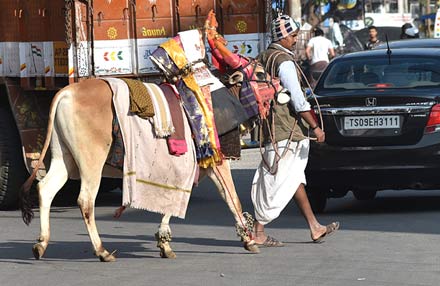
A unique element of Makar Sankranti is the
Gangireddu, wherein the bulls are decorated with old clothes and saris and the
men take them from house to house to collect gifts or money. “The bull visiting
our houses is considered very auspicious,” explains Ramana Reddy.
Another very important part of Makar Sankranti
are Nuvvulu (sesame seeds), Nuvvululaddoos and delicacies which are prepared
not just in Telangana, but in other parts of the country as well. Some people
also put a few sesame seeds in their bath water, as it is considered very
auspicious.
Even though the main attraction of Sankranti is
flying kites and the delicious Nuvvulu sweets, there is so much more to look
forward to on that day!

No comments:
Post a Comment